ES PCS Tech Routes: The "Big 4" Explained
Dec 09, 2025
ES PCS Tech Routes: The "Big 4" Explained
Energy Storage Power Conversion Systems are the core "brain" of any battery storage setup. While their core task (DC-AC conversion) is the same, their architectural philosophies differ vastly, forming four dominant schools of thought.
1. Centralized: The "Orthodox" Workhorse
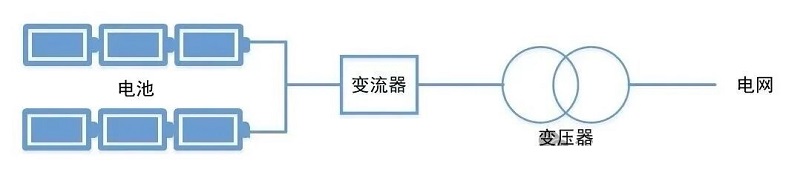
· Core Concept: One Big Inverter. Multiple battery clusters are paralleled on a large DC bus connected to a single, high-power PCS unit. Think of it as a "grand formation."
· Key Traits: Mature, cost-effective, simple control. Ideal for utility-scale projects (100MW+).
· Pros:
· Lowest Capex: Minimal equipment count, standardized, best $/kWh.
· Grid-Friendly: Excellent for bulk energy shifting and grid services.
· Proven Track Record: Well-understood deployment and O&M.
· Cons:
· "Barrel Effect": System performance and lifespan are limited by the weakest battery cluster.
· DC Circulating Currents: Parallel clusters can develop harmful currents if their states differ.
· Safety & Consistency: Requires highly uniform cells; thermal runaway in one cluster risks others.
· Verdict: The incumbent king of grid-scale storage, but pressure for safety/efficiency upgrades is rising.
2. String: The "Agile & Resilient" Contender
· Core Concept: One Inverter Per String. Each battery string (or small cluster) has its own, smaller PCS. It's modular and distributed.
· Key Traits: Flexible, precise, fault-tolerant. Designed for C&I, distributed, and smaller grid applications.
· Pros:
· Independent Operation: No "barrel effect"; strings don't drag each other down.
· High Availability: Fault in one string can be isolated without shutting down the whole system.
· Easy O&M: Granular monitoring, easier fault location, and hot-swappable modules.
· No Cluster Circulating Currents: Eliminated by design.
· Cons:
· Higher Capex: More power electronics units increase initial cost.
· Complex Integration: Requires more sophisticated system-level control and communication.
· Verdict: The dominant force in C&I and distributed storage, where flexibility and safety are paramount.
3. Distributed (DC-Coupled): The "Middle Path"
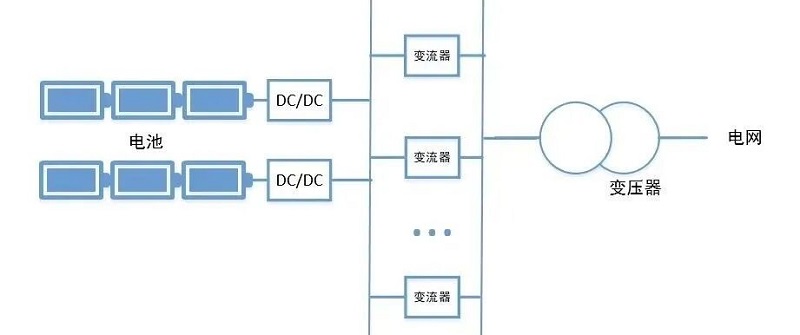
· Core Concept: DC/DC + Centralized PCS. Adds a DC optimizer (DC/DC converter) in front of each battery cluster before they feed into a centralized PCS.
· Key Traits: A hybrid. Aims to combine the simplicity of Centralized with the safety/precision of String.
· Pros:
· Eliminates Circulating Currents: DC/DCs decouple and manage each cluster's voltage.
· Optimized Performance: Enables per-cluster fine-tuning for longer battery life.
· Safety Boost: Reduces risks associated with direct DC paralleling.
· Cons:
· Lower Efficiency: Two-stage conversion (DC/DC -> PCS) adds losses.
· Higher Cost & Complexity: More components than Centralized; system tuning is harder.
· Verdict: The "safety-enhanced" upgrade for large-scale storage, gaining traction where performance outweighs pure cost concerns.
4. High-Voltage Cascaded (HVC): The "High-Tech Disruptor"
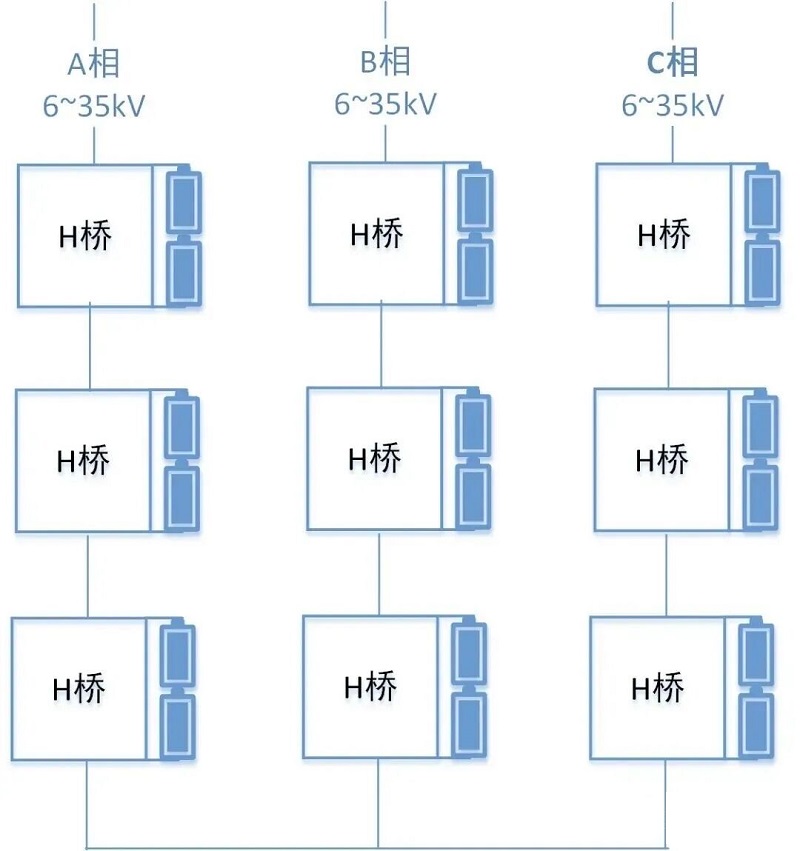
· Core Concept: Direct High-Voltage AC. Multiple power cell modules (with H-bridges) are cascaded in series to directly output medium-voltage AC (e.g., 10kV or 35kV) without a line-frequency transformer.
· Key Traits: Cutting-edge, high-efficiency, high-barrier. Targets very large utility sites.
· Pros:
· Highest System Efficiency: Removes transformer losses (~2-3% gain).
· Saves Space/Cost: No bulky transformer, simpler footprint.
· Superior Power Quality: Low harmonics, fast response.
· Modular Redundancy: Can bypass faulty modules.
· Cons:
· High Technical Barrier: Complex engineering, control, and protection required.
· High Power Threshold: Only economical above ~5MW.
· Immature Ecosystem: Fewer suppliers, less field history.
· Verdict: The future-facing option for mega-projects, promising superior performance if technical and cost challenges are met.
Trend Outlook & Bottom Line
The market is not converging on a single winner. Each route has its domain:
· Utility-Scale: Centralized remains dominant but is being challenged by Distributed (for safety) and HVC (for efficiency).
· C&I/Distributed: String is and will remain the clear leader.
· Megaprojects (>100MW): HVC could become the preferred choice.
The future is scenario-specific optimization, not a one-size-fits-all solution. The competition among these "Four Schools" will drive the innovation needed for the next phase of global energy storage deployment.