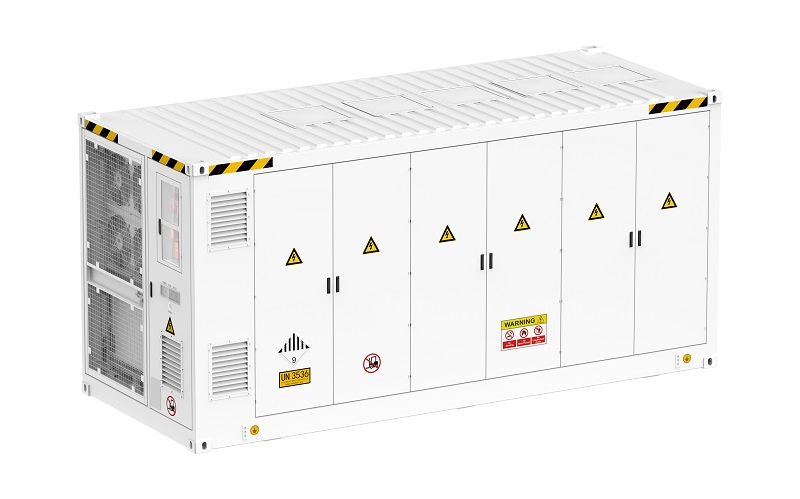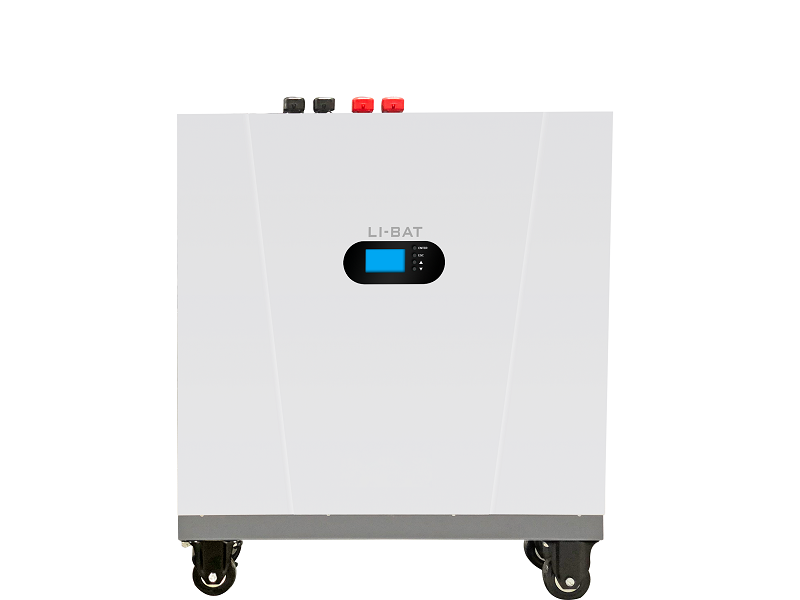

"Comprehensive Overview of Energy Storage System Architecture" Release Date: March 21, 2025, 20:00 I. Overall Architecture of Energy Storage Systems Energy storage systems consist of four core units that collaboratively achieve energy storage, conversion, and management: 1. Energy Storage Unit ◦ Function: Stores and releases electrical energy. ◦ Key Storage Media: ■ Lithium-ion batteries ■ Lead-acid batteries ■ Pumped hydro storage ■ Compressed air energy storage ■ Flywheel energy storage 2. Energy Conversion Unit ◦ Core Device: Power Conversion System (PCS) ◦ Role: Bidirectional AC/DC conversion: ■ Charging: AC → DC (grid → storage) ■ Discharging: DC → AC (storage → grid/load) 3. Energy Management Unit ◦ Function: The "brain" of the system: ■ Real-time data collection (storage capacity, charge/discharge status, grid load) ■ Optimization scheduling strategies ■ Coordinated control of multiple energy systems 4. Monitoring and Protection Unit ◦ Safety Mechanisms: ■ Real-time monitoring of voltage, current, and temperature ■ Abnormal condition alerts (overheating, overcharge/over-discharge) ■ Automatic cooling activation or circuit interruption II. Energy Storage System Architecture Types 1. Centralized Energy Storage System ◦ Features: Large-capacity battery bank + centralized PCS ◦ Advantages: Simple structure, easy control ◦ Challenges: ■ "Bucket effect" (performance limited by the weakest cell) ■ Inter-cell loop current risks ■ Wider failure impact range ◦ Applications: Grid-side storage, large-scale renewable energy plants 2. Distributed Energy Storage System ◦ Features: Decentralized deployment + flexible grid connections ◦ Advantages: Localized supply-demand balancing, enhanced renewable energy integration ◦ Challenges: Complex coordination, higher maintenance costs ◦ Applications: User-side systems, microgrids, distributed power sources 3. String-Type Energy Storage System ◦ Features: Modular design + independent PCS (one string per controller) ◦ Strengths: ■ High efficiency (eliminates string current in
New Trends in the 2025 Energy Storage Exhibition: Policy Shifts and Technological Breakthroughs I. Exhibition Overview: Record-Breaking Scale and Influence • Key Statistics: The 13th Energy Storage International Summit & Exhibition (ESIE2025) covered 160,000 square meters, attracting nearly 800 exhibitors, 4,000+ industry chain enterprises, and over 200,000 attendees. The event featured 50+ conferences and 100+ product launches. • Theme Focus: Centered on "Digital Intelligence Empowers Industry Transformation, Energy Storage Reshapes Energy Landscape," it highlighted China’s role in accelerating global energy transition through cutting-edge technologies. II. Policy Shift: From Mandatory Requirements to Market-Driven Mechanisms 1. Policy Updates ◦ Key Document: The NDRC and National Energy Administration issued the Notice on Deepening Market-Oriented Reform of New Energy Feed-in Tariffs to Promote High-Quality Development (No. 136 [2025]), removing energy storage as a mandatory precondition for new energy project approvals. ◦ Core Change: Energy storage deployment transitions from administrative mandates to market-driven decisions, allowing flexibility based on economic viability. 2. Marketization Initiatives ◦ Provincial Pilots: Guangdong and Shandong provinces enabled energy storage participation in electricity spot and ancillary service markets, boosting daily revenue for independent storage stations by 30%. ◦ Regulatory Support: The National Energy Agency emphasized advancing electricity spot markets and refining pricing mechanisms, while MIIT pledged to guide battery technology upgrades and promote integrated "renewables + storage" models. 3. Industry Impact ◦ Revenue streams expanded to include peak-valley arbitrage, ancillary services, and black-start capabilities, shifting focus from hardware costs to comprehensive value creation. III. Technological Innovations: Intelligence and Large Capacity Redefine Value 1. AI-Powered Energy Storage Systems ◦ Envision Energy’s EN 8 Pro: The world’s first AI-enabled
Trends in the development of solar power generation over the next 10 years ### 1. Technological innovation: Parallel progress in efficiency improvement and cost reduction 1. **Emergence of heterojunction (HJT) technology** - Conversion efficiency exceeds 27%, cost reduction of more than 40% - Low temperature coefficient and high weak light response become mainstream technology 2. **Breakthrough in commercialization of perovskite solar cells** - Laboratory efficiency exceeds 26%, mass production target is 25% - Efficiency improvement by tandem with crystalline silicon 3. **Accelerating spread of N-type batteries such as TOPCon and IBC** - High efficiency and low degradation replace PERC ### 2. Market structure: Distributed and energy storage are driving growth 1. **Rapid growth of distributed solar power** - Annual growth rate of residential solar power exceeds 30% - "County-level promotion" policy promotes market expansion 2. **Standardization of solar power + energy storage** - Market size to reach 500 billion yuan in 2030 - Demand for industrial and household energy storage surges 3. **Continuous expansion of overseas markets** - Europe, the Middle East, and Southeast Asia are key regions ### 3. Policy-driven: Acceleration through carbon neutral targets 1. **China's 14th Five-Year Plan target** - 12 billion kW cumulative solar power installation capacity by 2025 - Development model of "distributed main body, centralized subsidy" 2. **Strengthening global decarbonization policies** - EU, US, etc. expand subsidies and tax incentives 3. **Promotion of green power trading and carbon market** - Improved profits through solar green certificates and carbon trading ### 4. Progress in smartification: deepening digital and AI 1. **Rise of virtual power plant (VPP) model** - Optimal control of distributed solar power using AI 2. **Application of digital twin technology** - Optimization of power plant life cycle management 3. **Smart O&M and drone inspection** - Big data + AI for failure prediction and maintenance cost reduction ### 5. Future challenges and opportunities 1. **Challenges** - Impact of fluctuations in silicon raw material prices - Need to improve the power grid's capacity 2. **Opportunities** - New models such as solar + hydrogen and BIPV - Global energy transition drives demand ### Conclusion: Outlook for the solar industry over the next 10 years - **Technology**: HJT and perovskite lead the efficiency revolution - **Market**: Distributed + storage are the core of growth - **Policy**: Driving force: Global decarbonization goals - **Smart**: Digital and AI transform the industry - **Summary**: The solar industry is entering its golden decade! ^_^
Original article | New energy power AC | April 1, 2025 16:37 ---------------------------------------------------- [Why is this combination essential?] ■ Resource aggregation: Efficient management of distributed energy ▼ Background and significance As the proportion of new energy in the power system exceeds 40%, real-time control of distributed resources (such as EVs and storage batteries) is essential to adjust the unstable output of solar and wind power generation. However, traditional centralized management methods cannot integrate resources with different owners and technical specifications. ▼ Case study: Ningde era "Energy Cloud" ・Implementation details: Connecting 1.2 million EVs (total capacity 6GWh) to the power grid ・Technology innovation: Charge and discharge control using V2G3.0 protocol (designed to reduce battery burden) ・Results report: Achieved instantaneous power adjustment of 500MW in Zhejiang Province, generating annual revenue of 2,300 RMB for users ■ Spatio-temporal optimization: Resolving supply and demand mismatches ▼ Specific issues Inconsistencies between regions and time periods are becoming more serious, such as the overlap between the peak solar power generation period in the northwest and the valley of power demand in the eastern industrial area. ▼ Successful model: Tesla South Australia VPP ・Expansion scale: Building a home battery network for 12,000 households ・AI utilization: Weather forecast-linked Autobidder automatically adjusts supply and demand ・Economic effect: 40% reduction in household electricity costs, 4.8 years shorter payback period for equipment investment 【Points of evolution in 2025】 ◎ At the forefront of technological innovation 1. Ultra-high speed control: command transmission in less than 50 milliseconds (Huawei HarmonyOS adopted) 2. Precision prediction: 99.3% accuracy achieved with 3D digital twin (Ali Cloud performance) ◎ New revenue model | Revenue type | Specific examples | Performance values | |--------------------|--------------------------|---------------------| | Peak adjustment | Ningde Times Zhejiang Province project | 0.8 RMB/kWh | | International electricity arbitrage | EU cross-border trading | 0.18-0.25 EUR/kWh | | Environmental value sales | Tesla South Australia | +0.05 AUD/kWh | 【Challenges for the Future】 ① Data governance Referring to the EU's "Guidelines for Energy Information Protection," clarify the rights of user data ② Unification of technical standards Establish interconnection standards for charging equipment and storage batteries (based on China Electricity Federation 5 standards) ③ Strengthening risk management Develop financial derivatives to respond to fluctuations in electricity prices (referring to the Guangdong pilot case) ---------------------------------------------------- In conclusion: The collaboration between electricity retailers and virtual power plants is a "redesign of the energy ecosystem" that goes beyond mere technological integration. From home storage...